
admin
If you are weighing fencing vs retaining walls and wondering which is better for property boundaries, start by asking what job the structure must do. A fence marks the boundary, provides privacy and improves security. A retaining wall holds back soil where ground levels differ, protecting structural integrity and neighbouring land, just as fences and retaining walls do . On level sites a fence often solves the brief; on sloped or cut sites a wall can be essential. The right answer sometimes combines both so the wall manages soil pressure and proper drainage, while the fence delivers privacy and a clear line between separate properties.
What is the difference between a fence and a retaining wall?
A fence is a boundary screen. It defines property lines, deters entry, and lifts visual appeal with colours and profiles that match the home. It does not resist soil pressure. A retaining wall is a structural element that resists lateral loads from soil, garden beds, and excavated earth. Most retaining walls serve to stabilise level changes so the fence’s natural ground surface on each side remains supported. Because the roles are different, footings and approvals differ too, often requiring a structural engineer’s expertise . Fences are engineered for wind; walls are engineered for soil pressure and drainage. You will see the contrast in the details shown in our guide to Retaining Wall Recommendations And Material Options.
When do I need a retaining wall instead of a fence?
Choose a wall when ground level differs enough that soil slumping or water scouring, leading to soil erosion, is likely along the boundary line. Typical triggers include cut or filled blocks in a master planned community, driveway batters that sit above a dividing fence, raised garden beds on the boundary, or concrete slabs and paths placed higher than the neighbour’s property. If you already have a constructed fence leaning toward lower ground, the wall sits under the design, not the other way round. A professional boundary assessment will spot these risks early. If you want to scope length and height changes before you meet a contractor, the Fencing Quote Calculator will help you map the run and flag where retaining is required.
Can a retaining wall act as a boundary and a fence at the same time?
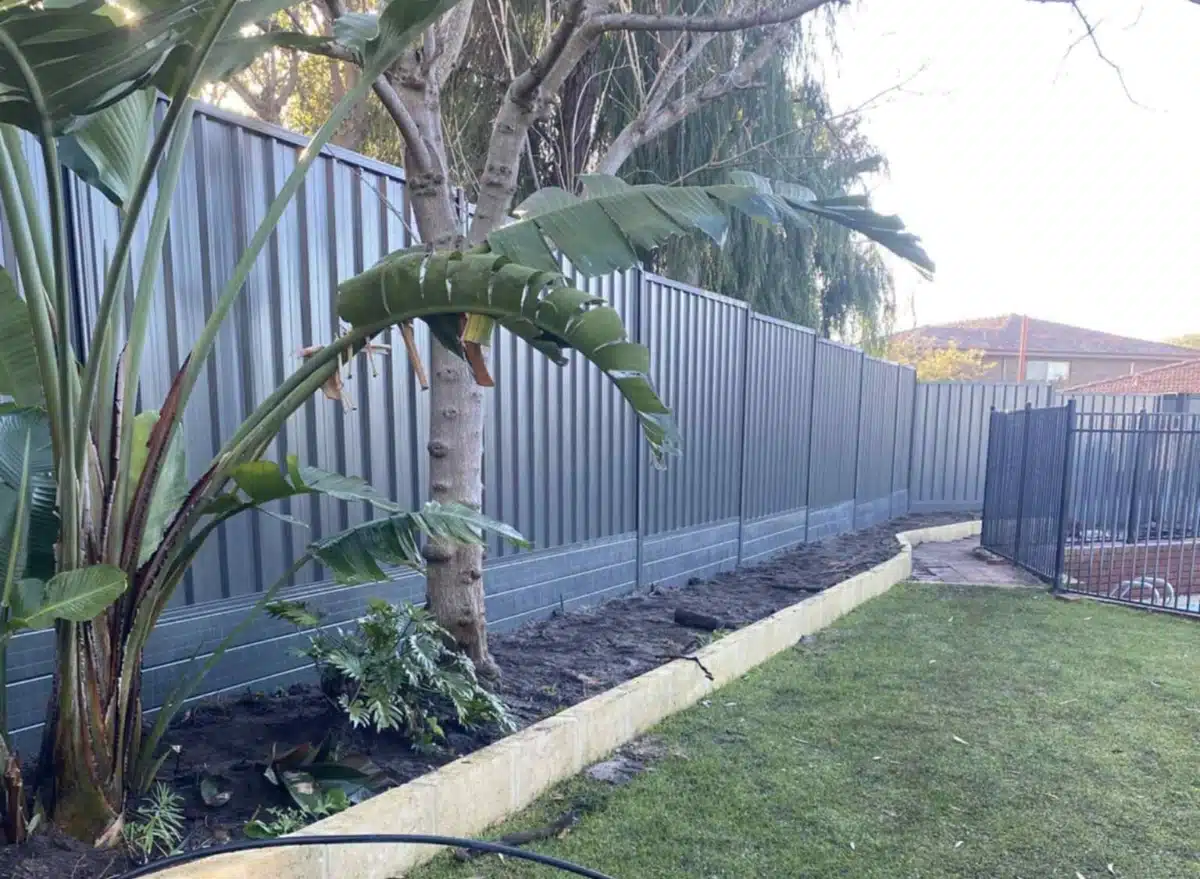
Yes, but treat them as two structures. The wall serves the soil while also ensuring stability for the neighbouring property . The fence serves privacy and security. Keep the loads separate for compliance and longevity. The best practice is to build the wall to the correct location first, then set fence posts behind the wall or through engineered sleeves so wind loads from the new fence do not lever the wall. Step heights so both elements follow natural ground level cleanly, rather than forcing one bulky lift. You can see examples of neat wall and fence integrations in our Gallery.
What are the pros and cons of fences vs retaining walls?
On level ground a fence is fast to install and is usually the more affordable option per metre. It delivers immediate privacy at 1.8 metres, deters casual access and can align with swimming pool fencing rules when required. The limitation is structural support. A fence cannot retain soil, so it relies on the native ground remaining stable. A retaining wall stabilises soil, prevents erosion, and often increases property value for property owners by creating flat, usable terraces. You pay for that structural support with excavation, drainage layers, and engineering. The combination of wall and fence solves both needs. It costs more than a fence alone, but it avoids future disputes by separating structural components and keeping each element within its design limits.
Which is more affordable for property boundaries?
On most level sites a fence is the cost effective solution. As soon as the ground steps or a neighbour’s land is lower than your fill, the economics change. A wall introduces excavation, backfill, geofabric, and ag pipe, plus necessary council approvals or a private building certifier where heights or loads trigger building approval. It is more expensive upfront, yet it can benefit multiple properties by protecting structures and reclaiming flat space for lawns, play areas and driveways. If you are comparing budgets, read How Much Does Fencing Cost and remember to add allowances for retaining where the boundary line changes level.
Do fences work on sloped or uneven terrain?
They do when the slope is modest. Installers can step bays so each panel remains level, or use raked rails so the bottom follows the grade. Expect more posts and caps on stepped runs and more attention to set out so under gaps are consistent. Where soil pressure is present, a fence alone is the wrong tool. Solve retention first, then add privacy. For low maintenance privacy panels on grades, Colorbond Fencing is a strong choice for fence owners because it offers smooth faces and neat tops without ongoing painting.
Do retaining walls prevent erosion and soil movement?
Yes, provided they are built as structural walls with proper drainage. Most retaining walls use free draining aggregate behind the face, geofabric to stop fines entering the drainage layer, and a continuous 100 millimetre slotted ag pipe to a daylight outlet or soakwell. This package relieves hydrostatic pressure, reduces staining, and protects a neighbour’s property from encroaching soil. Where a wall replaces an old fence that has leaned due to soil pressure, the change also reduces the chance of future wall disputes.
What materials are used for retaining walls vs fences?
Walls are typically limestone blocks, concrete sleepers with galvanised steel posts, reinforced masonry, or poured concrete. These systems are chosen for structural integrity, expected life and compatibility with local rules. Fences are chosen for privacy, security, and style that can provide visual appeal. Common materials include Colorbond steel in a range of colours, aluminium slat with semi privacy airflow, tubular aluminium for compliant swimming pool fencing, composite boards for a timber look without painting, and chain link for utility areas. If your brief is privacy plus durability, you will find a useful summary in Colorbond Fencing Benefits.
How tall can a fence or retaining wall be without permits?
Heights vary by local council, frontage and existing development approvals. Front fences usually have lower height caps than side and rear boundaries, and pool barriers have their own standards for latch height and gaps. A new retaining wall above a modest height will often need development approval and building approval. A dividing fence at standard height may be exempt, yet fixings on or near a wall can still require permission. Always verify the thresholds before you order custom panels or book machines. Local rules change, so a quick call can avoid delays.
What are typical lifespan and maintenance needs for each?
Colorbond and aluminium fences commonly last twenty to thirty years with wash downs and minor hardware checks. Timber fences last ten to twenty years with re sealing or painting cycles, and chain link typically lasts fifteen to twenty five years depending on coatings and exposure. Reinforced masonry or concrete walls often exceed thirty years when drainage and waterproofing are correct. Timber sleeper walls have shorter expected life and need closer monitoring. Early maintenance prevents lean, rust, and rot, which should be handled by qualified professionals. If a run moves after heavy rain or an old fence shows signs of pull, book Fencing Repairs before minor movement becomes structural.
Are retaining walls better for noise reduction than fences?
Mass helps with acoustics. Masonry and concrete offer a better barrier to road noise than lightweight panels. Where a wall is not practical, a solid fence combined with dense planting on the traffic side improves noise performance at a lower cost.
Which option offers more privacy?
A fence delivers immediate privacy because you can build to 1.8 metres and sometimes higher where permitted. A wall only screens to its built height, so it rarely achieves eye line privacy by itself. If airflow and filtered views are desirable, aluminium slat in semi privacy mode is a neat solution that sits behind or above a wall. You can explore styles and gap options under Aluminium Slat Fencing to help avoid neighbourhood disputes .
Do property lines or setback rules differ for walls vs fences?
They often do. Structural walls on frontages may have different setbacks to dividing fences, and sight triangles at corners can reduce allowable height for both. The safest route is to confirm the correct location with a boundary survey if pegs are missing, keep all footings wholly located on your title, and record neighbour agreements for shared dividing fences or changes in height. The aim is to avoid disputes by building in the right place with the right permission.
Will a retaining wall increase usable yard space?
Yes. When the ground is sloped, a wall can turn a strip of awkward grade into flat terraces for lawn, play zones, sheds or wider parking. Step longer walls to follow natural features and avoid one tall face that dominates the boundary. Design access paths and drainage at the same time so water does not pond behind the wall or run onto a neighbour’s land.
Are there drainage considerations for retaining walls?
Drainage is critical. Free draining backfill, geofabric, a continuous slotted ag pipe to daylight or a soakwell, and weep holes on suitable wall types will keep pressure down and finishes clean. Waterproof the soil face where required to prevent damp stains. Keep irrigation lines and downpipes away from the back of wall. You will find construction notes and material options in Retaining Wall Recommendations And Material Options.
Conclusion
If your site is level and you want privacy with minimal maintenance, a fence is likely the right call. If ground levels differ, build a retaining wall to carry soil loads and add a fence for privacy and a clear boundary. When you combine both, set the fence as a separate structure so wind loads do not act on the wall. Check council approval requirements early, confirm the correct location with a survey where needed, and document neighbour agreements to avoid future disputes.